The best kids' party for your child depends more on their age than on the theme. A 2 year old needs 90 minutes, a nap-friendly start and play stations; a 5 year old wants 2 hours, 3 or 4 games and a theme they picked; a 10 year old wants friends, food and one big activity. Use the table below to set the basics, then open the guide for your child's age.
At a glance: what works at each age
| Age | Length | Friends to invite | What to plan | Themes that fit |
|---|---|---|---|---|
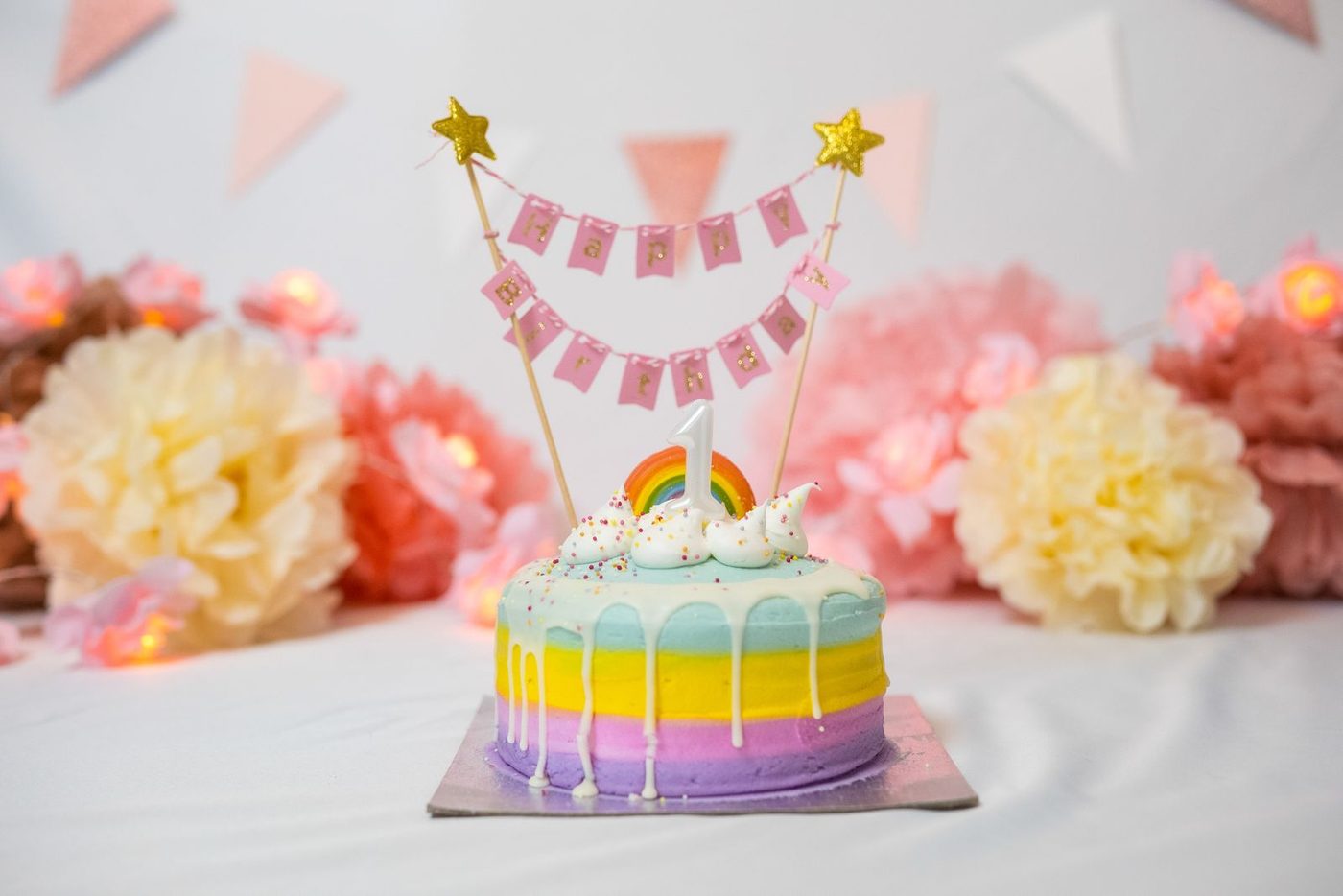
| 1st birthday | 90 minutes to 2 hours | Family and close friends | A smash cake, photos, a play mat | Berry sweet, safari, space |
| 2 year olds | 90 minutes | About 3, plus siblings | 2 or 3 play stations | Construction, farm, race car |
| 3 year olds | 90 minutes | About 4 | 2 activities, free play | Dinosaur, under the sea, rainbow |
| 4 year olds | 90 minutes to 2 hours | About 5 | Dress-up, 2 or 3 short games | Superhero, princess, pirate |
| 5 year olds | 1.5 to 2 hours | About 6, or the class | 3 or 4 one-rule games | Pop star, unicorn, video game |
| 6 to 8 year olds (8 year olds) | 2 hours | 7 to 9 | 3 or 4 team games and a craft | Sports, slime and science, camping |
| 9 to 12 year olds | 2 to 2.5 hours | A few close friends | One big activity, food, free time | Glow, detective mystery, spa |
"Friends to invite" uses the rule of thumb for young kids: their age plus one. It's a starting point, not a rule; whole-class parties are common from kindergarten on. If you like a checklist, plan your party free on Festidy and it counts the to-dos back from your date.
How parties change with age
Babies and toddlers (1 to 3). The party is for the family as much as the child. Time it around naps, keep it to 90 minutes, and plan more food for grown-ups than for kids. Toddlers play next to each other rather than together, so set out activities instead of running games. Everything within reach must be safe for under-3s: no small parts and no latex balloons.
Preschool and kindergarten (4 to 5). Now kids can follow one rule. Dress-up themes shine, games should be short and impossible to lose, and many parents stay. Food can be more grown-up, but cut grapes in half and skip popcorn if younger siblings are coming.
Early school years (6 to 8). The classic 2-hour party: teams, relays, a craft, a theme with real buy-in. Drop-off parties start here. Kids care who's invited, so the guest list takes some thought.
Tweens (9 to 12). Fewer friends, longer party, less structure. One big thing (a movie night, a cooking challenge, a mystery to solve), good food and time to hang out matter more than a list of games.
The details by age are in birthday party games by age and how long a kids' birthday party should be.
The same at every age
- Send invitations 3 to 4 weeks ahead and ask for replies a week before. Ask about food allergies on the RSVP.
- Plan food from the headcount, not a guess. Pizza: 2 slices a kid (1.5 for kids 5 and under), 3 a grown-up. Ice: about 2 lb a guest. One cake serving each. The party food calculator does the math for kids and grown-ups separately.
- One goodie bag per child, plus 2 spares for siblings who tag along.
- Budget by guest. About $15 a guest for a simple home party, $30 with a bakery cake and one hired activity, $50 with an entertainer and rentals.
Festidy plans the party for your child's age: pick a theme (themes are sorted by age), add the date and guest count, and you get the invitation with RSVPs, a dated checklist and a shopping list sized to the replies, free and with no sign-up.